All Hail the Winter Garden!
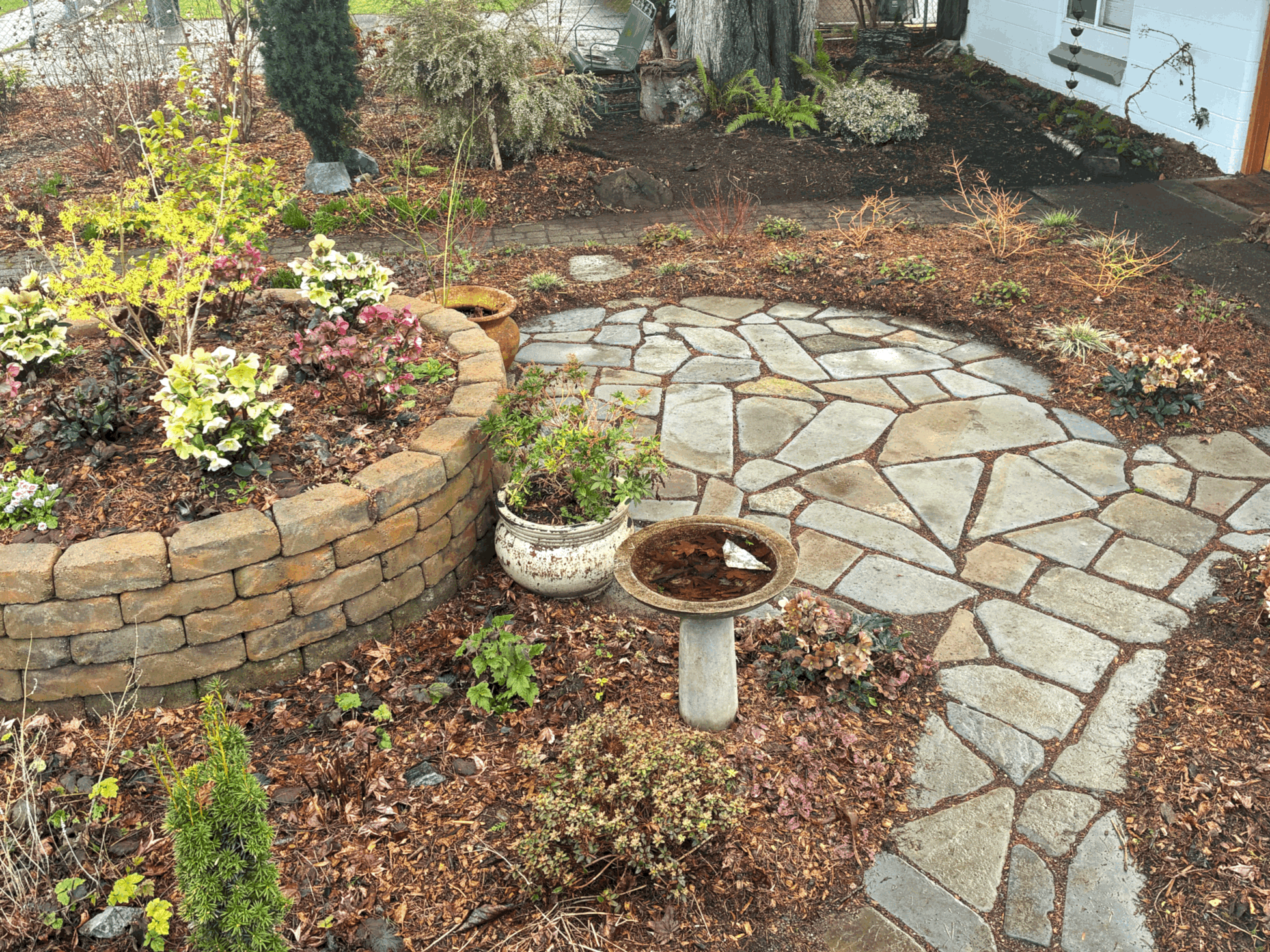
The Winter Garden, one year after planting.
Like many Seattleites, I’ve thought about how nice it would be to come home from Thanksgiving dinner, pass out, and sleep until that first glorious 50’s-and-sunny day at the end of February. But seeing as hibernation isn’t an option, surviving the Big Dark requires a combination of hot cocoa, Zoloft, and a plane tickets to Puerto Vallarta. For Seattle gardeners, winter means savoring those final intrepid blooms that linger until frost, then counting down the days until the first bulbs start to poke through the loam. Conscientious gardeners seek out plants that offer winter interest beyond the dense, dull green of that oversized rhododendron the previous owner planted too close to your house.
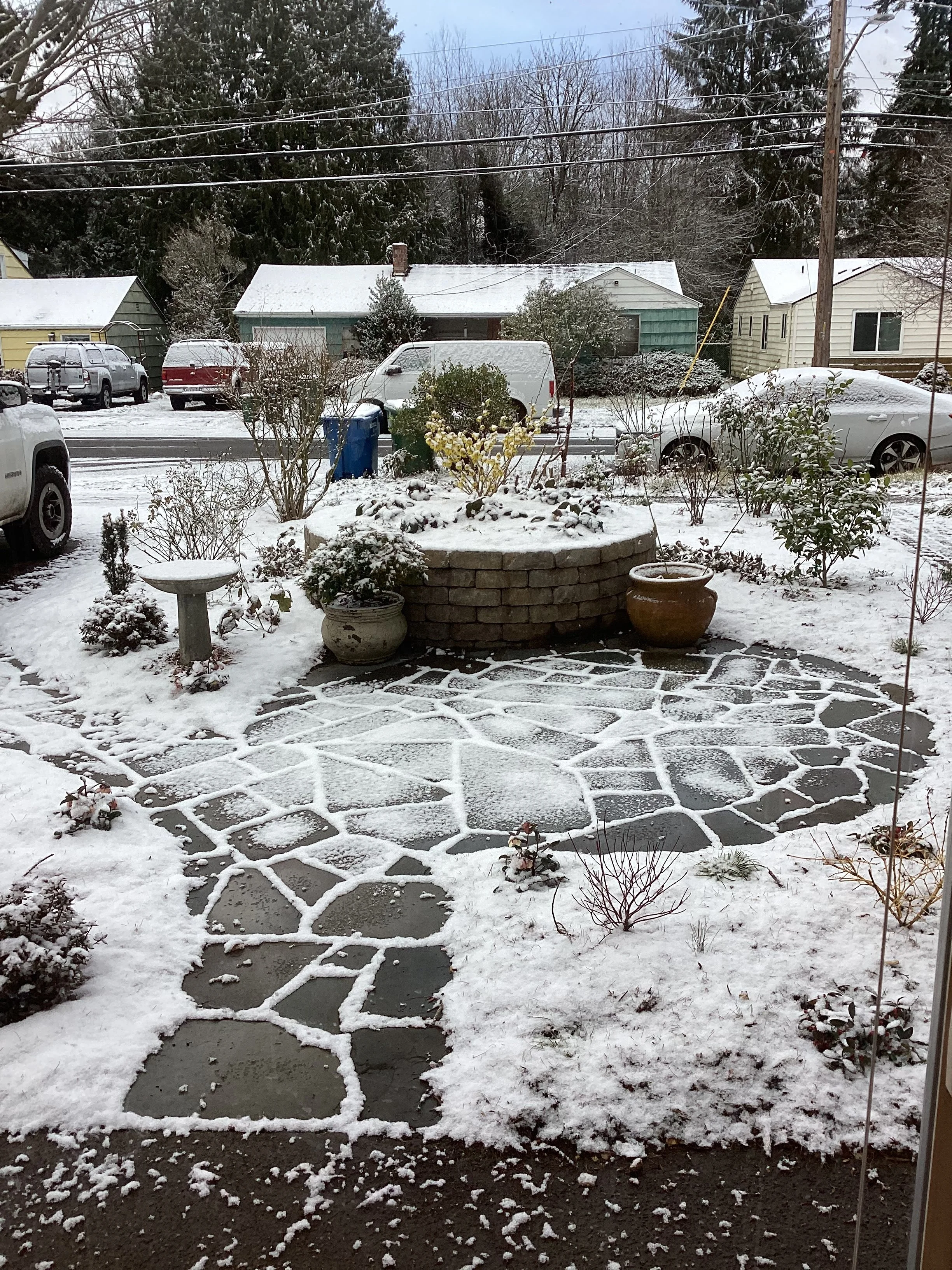
Snow in the Garden, February 2025
“Winter interest” is one of those terms fancy gardeners like to throw around to convince laymen that we know more than them. Some of this “interest” is lost on the uninitiated. “Those aren’t dead flowers, they’re decorative seedheads, you tasteless moron.” I’m a firm believer in winter interest, but even I can’t help but feel like we grade it on a curve. Branch structure might be nice to look at, but most of us miss the autumn color when the last leaves fall, and rejoice when foliage returns. For the intervening months, all we can do is convince ourselves that a thicket of bare twigs is as just as nice as the most ebullient perennial garden—that this time of year doesn’t suck. But maybe that’s just the seasonal affective disorder talking.
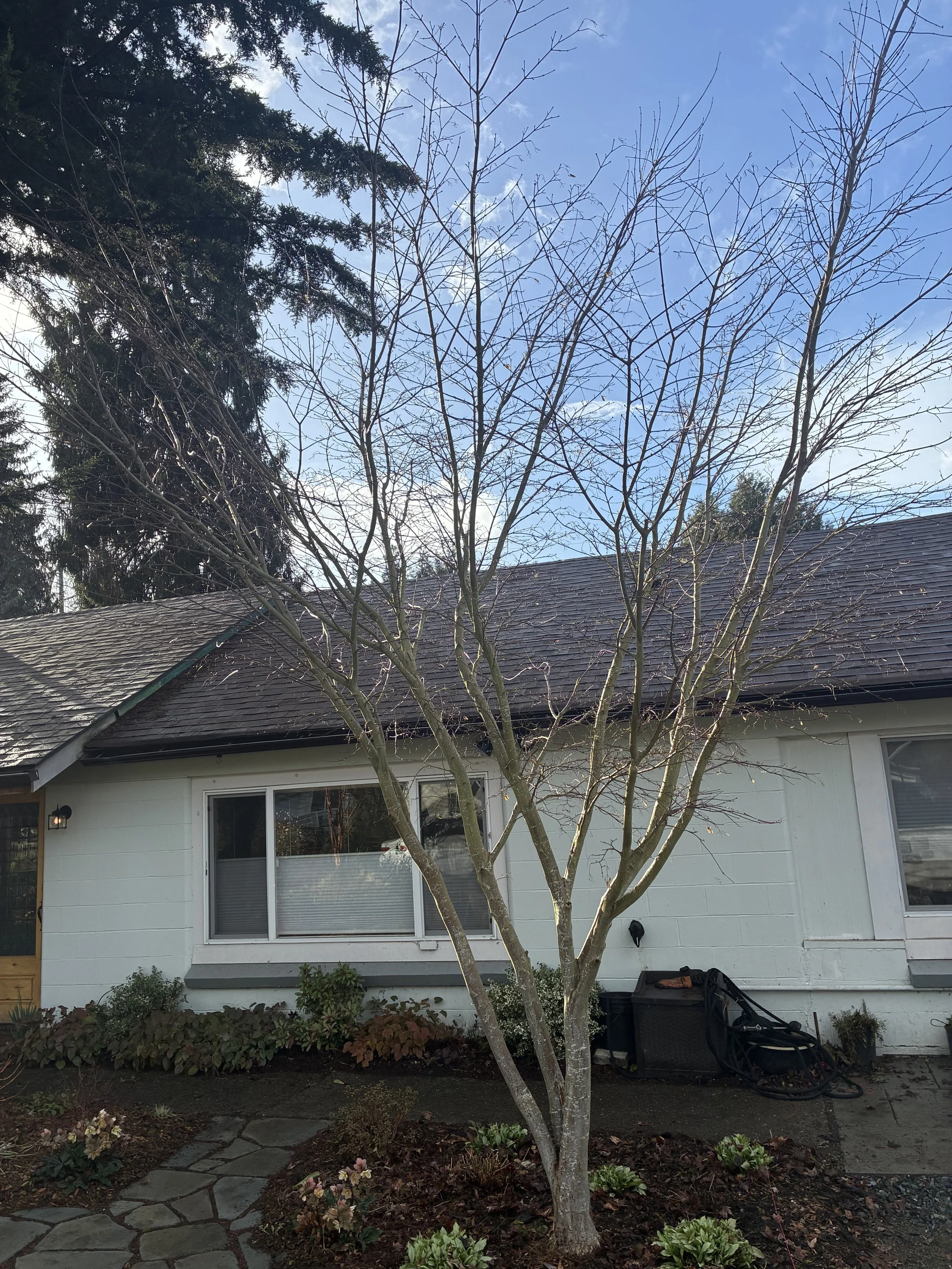
Branch Structure! How exciting!
I’m sure there’s a point to be made about needing the dark to appreciate the light, yin and yang, that sort of thing. But that’s not why I garden. I want color! I want blooms! A winter garden should be eye-catching, even if the rest of the yard weren’t a brown, sodden mess. A fellow Master Gardener once said that gardeners get greedy, and in my case, he’s right! If the sun must set before five, I want to look at some goddam flowers.
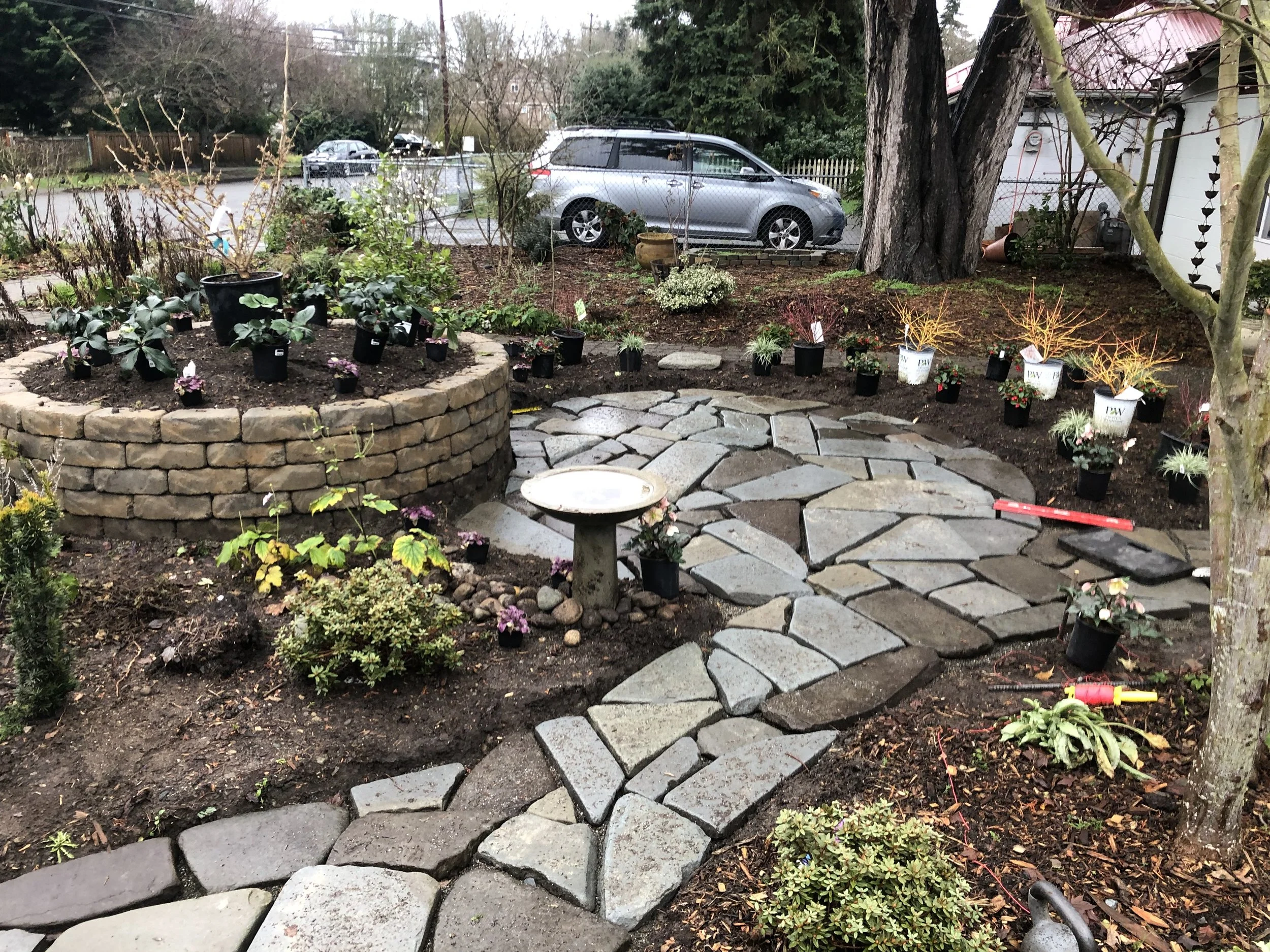
Laying out the winter garden, January 2025.
I planted my winter garden around this time last year, my first winter in the new house. It sits in the middle of the front yard, visible from the street and through the living room window in case I want to gaze upon it without freezing my buds off. This is the conventional wisdom for a winter garden—plant it where it will be seen, even if you’re only going outside to check the mail or scrape off your windshield. In choosing plants, I aimed to incorporate five B’s of winter interest: bark, branches, berries, bright foliage, and of course, blooms. One year on, I’m not entirely disappointed.
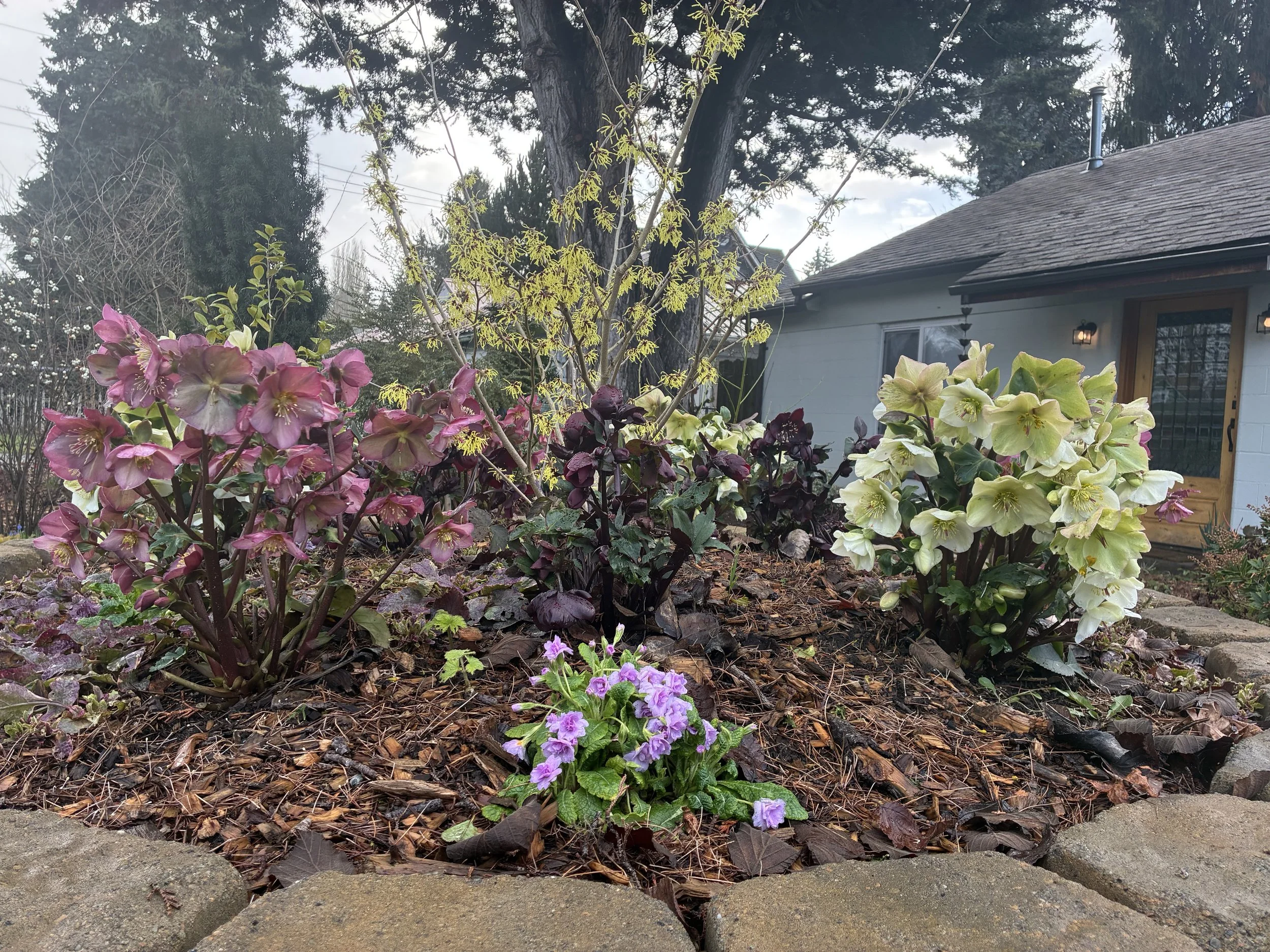
Primrose, Hellebores, Witch Hazel.
The focal point of this space is a round planter loaded with hellebores, beneath a canopy of yellow witch hazel (Hamamelis x Intermedia “Pallida”). The hellebores—from the “Ice N’ Roses” collection—bloom earlier and more profusely than cultivars I’ve planted in the past, making them a great choice for the aforementioned greedy gardener. I jammed in a couple clumps of mauve primrose, and a few swaths of Ajuga “Burgundy Glow”—one of my favorite ground covers—which brings a deep flush of purple-red foliage to the garden. It will look even nicer come late march, when it sends up flower spikes of such vivid color that they form a glowing blue carpet.
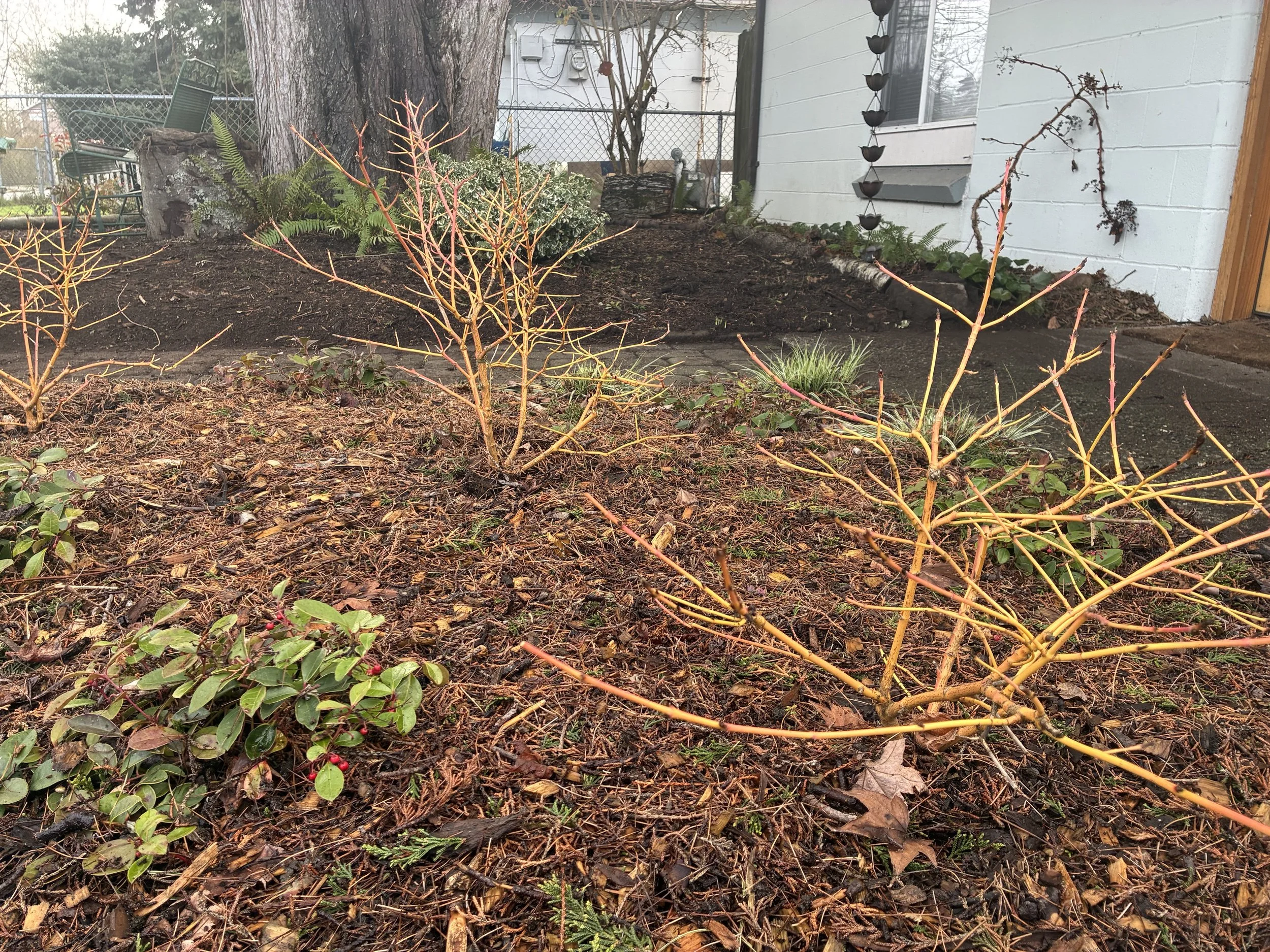
“Arctic Fire” Dogwoods, Wintergreen, “Everest” Sedge.
Opposite the planter, is my “bark and berries” bed, featuring colorful red and yellow twig dogwoods (Cornus Serica “Arctic Fire;” Cornus Alba “Baihalo”) and the evergreen ground cover wintergreen (Gaultheria Procumbens), whose typically bright red berries have been underwhelming this year. To brighten up the margins, I planted a variegated sedge (Carex Oshimensis “Everest”), which I have not enjoyed nearly as much as the rabbits have. In the other corner stands Japanese maple with a decently graceful shape, which I underplanted with lungwort (Pulmonaria “Trevi Fountain”), another spring bloomer with decent winter foliage once you trim back the previous year’s scruff.
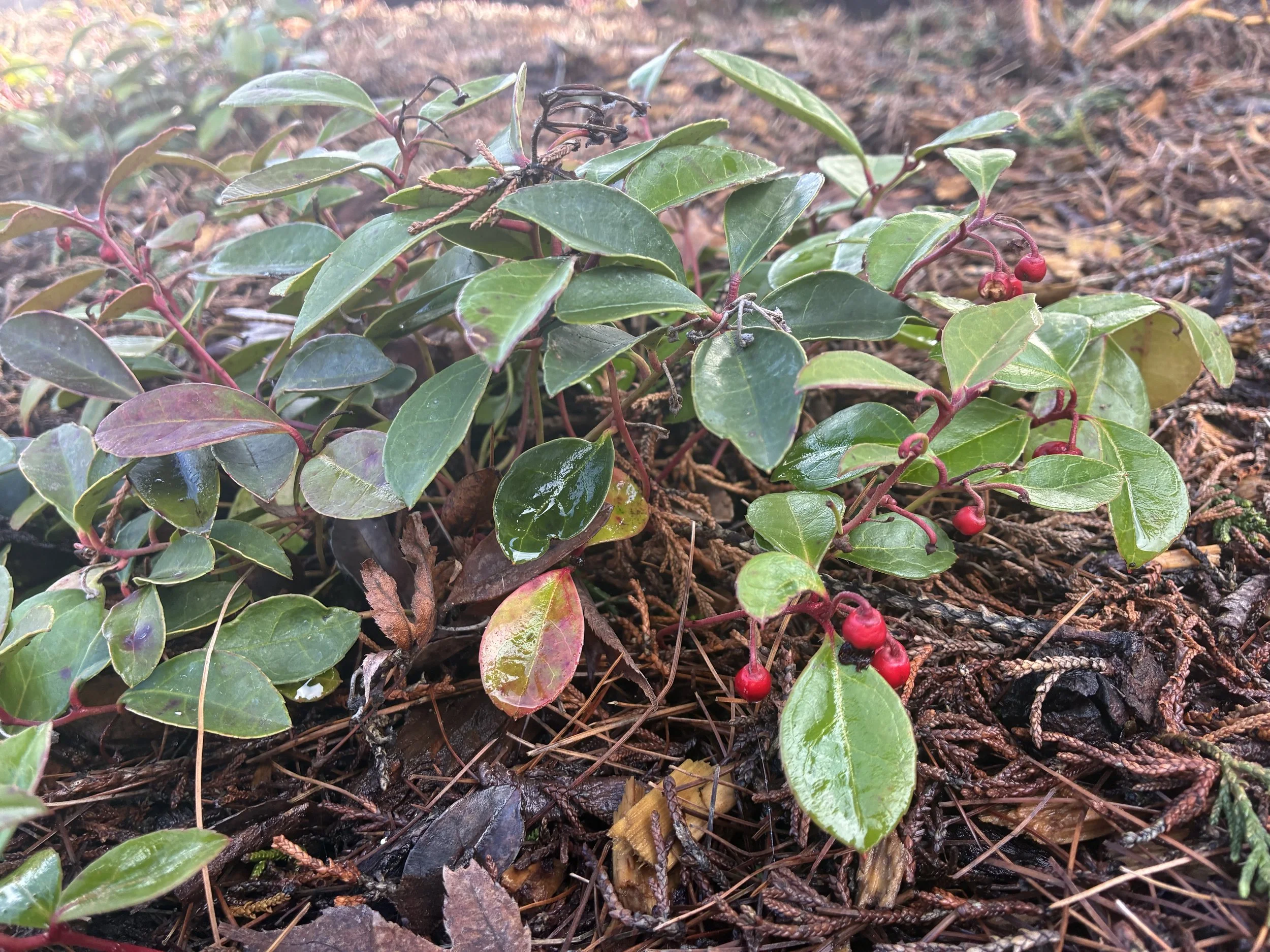
Both the leaves and berries of wintergreen are edible and have a slight minty taste.
Winter interest can be seen in other parts of the front yard as well. Snowberry (Symphoricarpos Albus), is a common northwest native that holds its berries for a long time because birds only eat them once all other food sources have been exhausted. There’s also a large Azara Microphylla Variegata, which I transplanted from another part of the yard, and will be pleasantly surprised if it survives. It appears to have buds, which turn into tiny, vanilla-scented flowers later in the season.
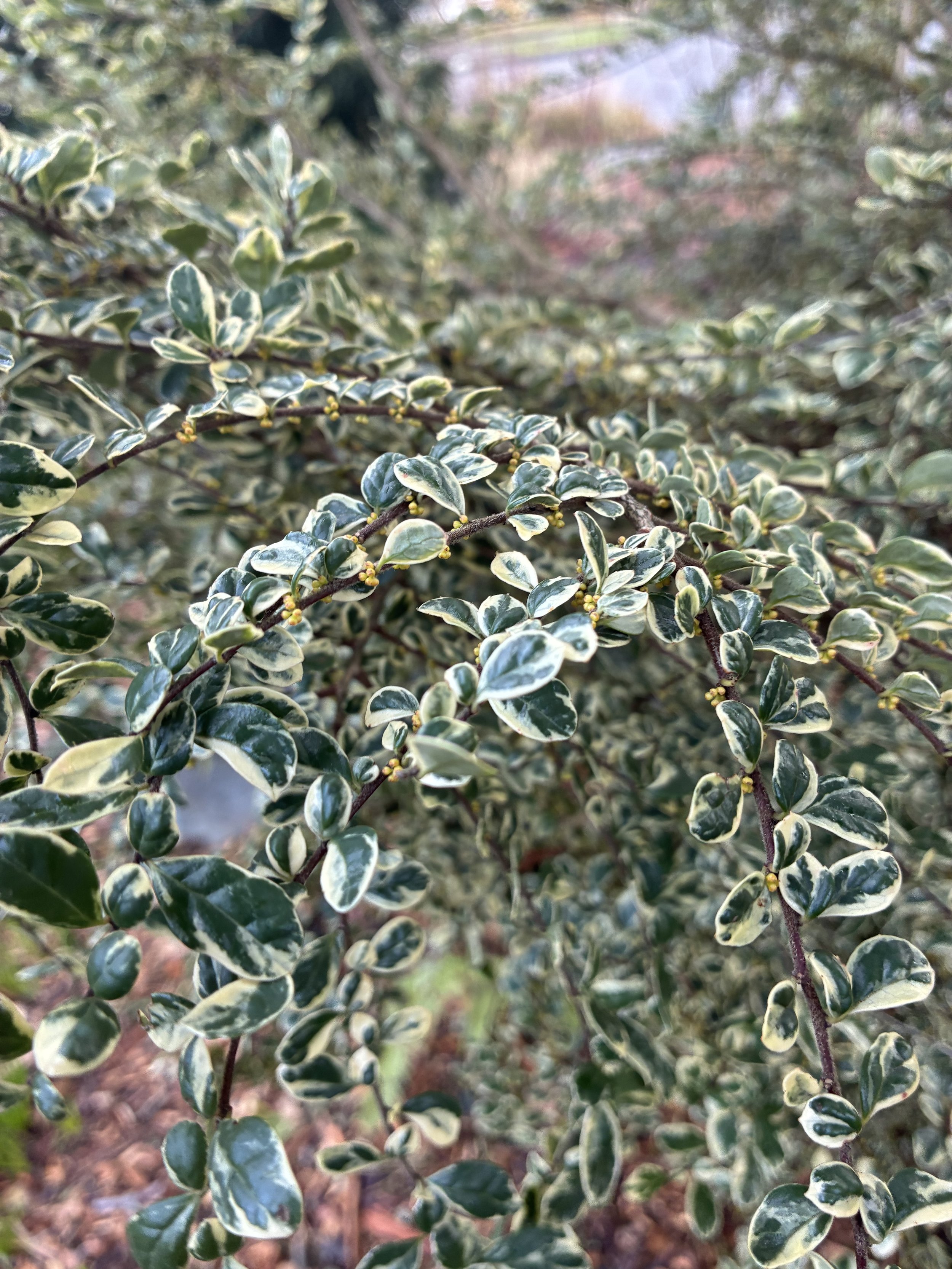
Buds on Azara Microphylla Variegata.
If planned correctly, a winter garden will offer something interesting to look at from first frost until the beginning of March. By then, early bloomers like flowering currant and creeping mahonia, begin to signal the change of season. By the time the winter bloomers finally fade, a colorful cannonade of bulbs will emerge to take its place and finally see off the Big Dark. Hellebores notwithstanding, good effing riddance
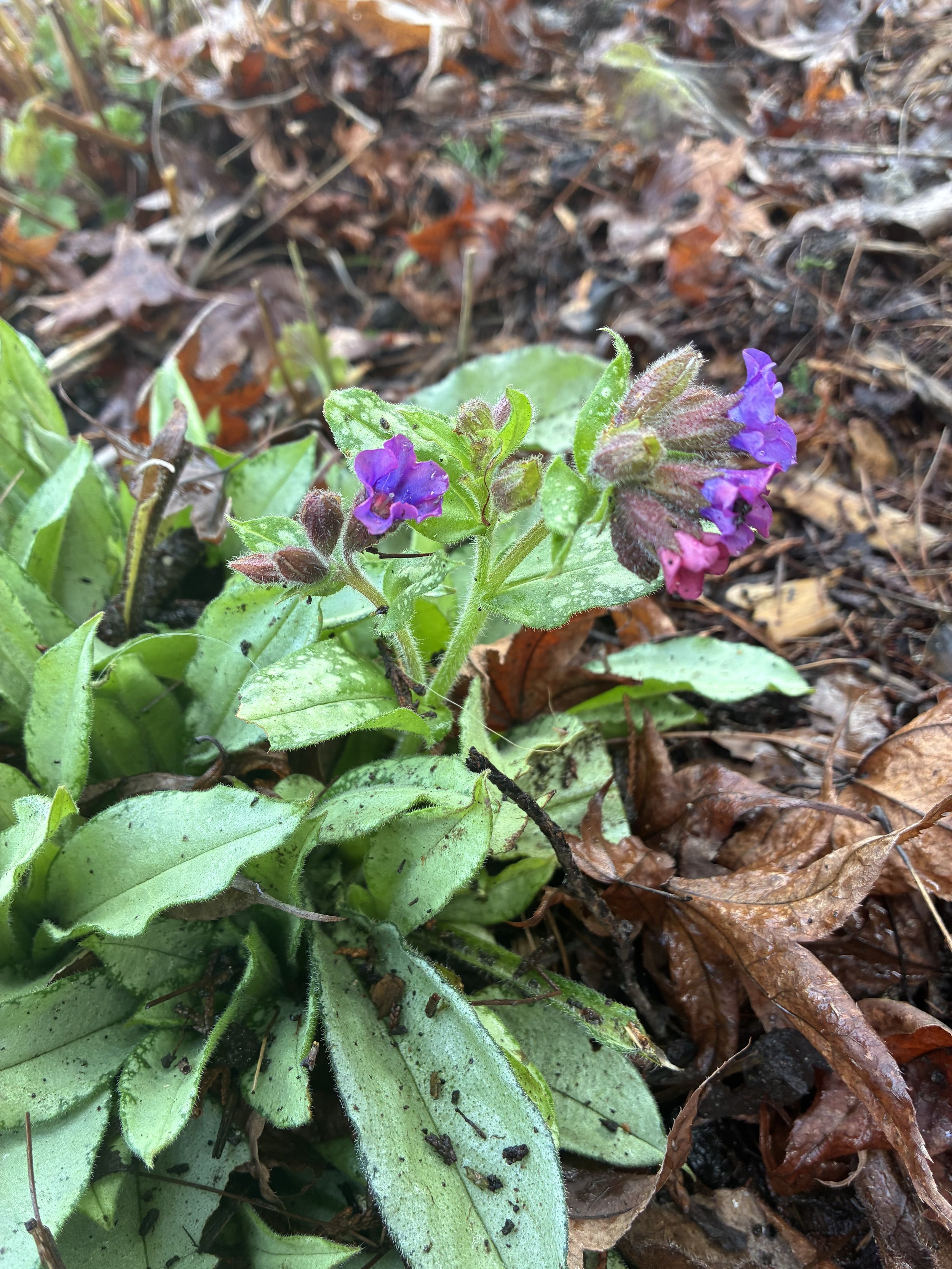
Spotted foliage and precocious blooms on Lungwort. A sign of an early spring!