Summer Color in the Garden
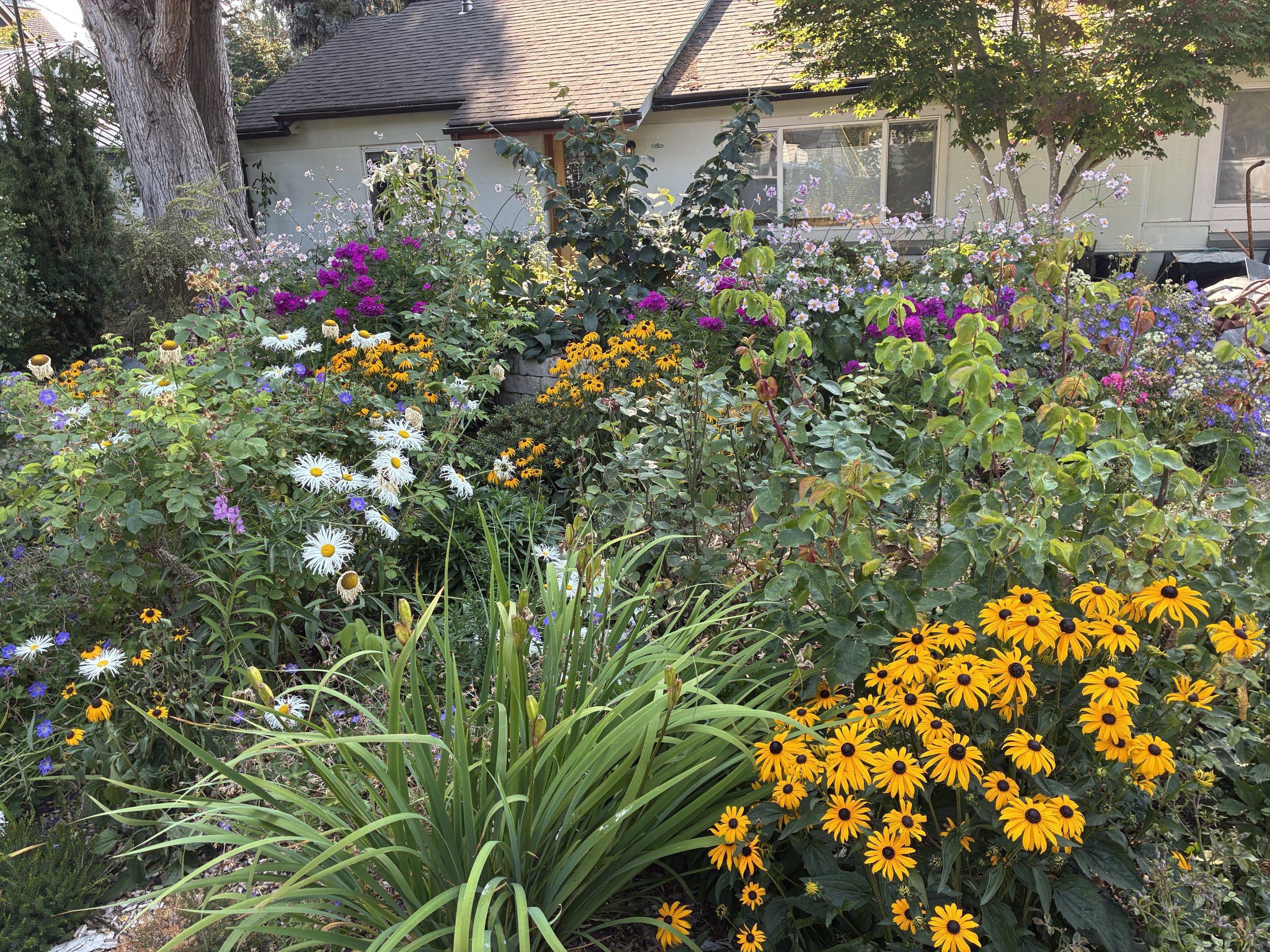
High Summer in the Front Yard
There’s an old saying that in Seattle, summer begins on July fifth. For gardeners, it’s a long time coming. Much of spring is spent in anticipation. For months, we’ve waited for the first signs of life to emerge in our perennial beds. Anxiety abounds as we slowly discover which perennials have survived, and which have rotted in the mud. We steel ourselves against the urge to plant our tomatoes on the first sunny weekend in May, no matter how close our starts are busting out of their pots.
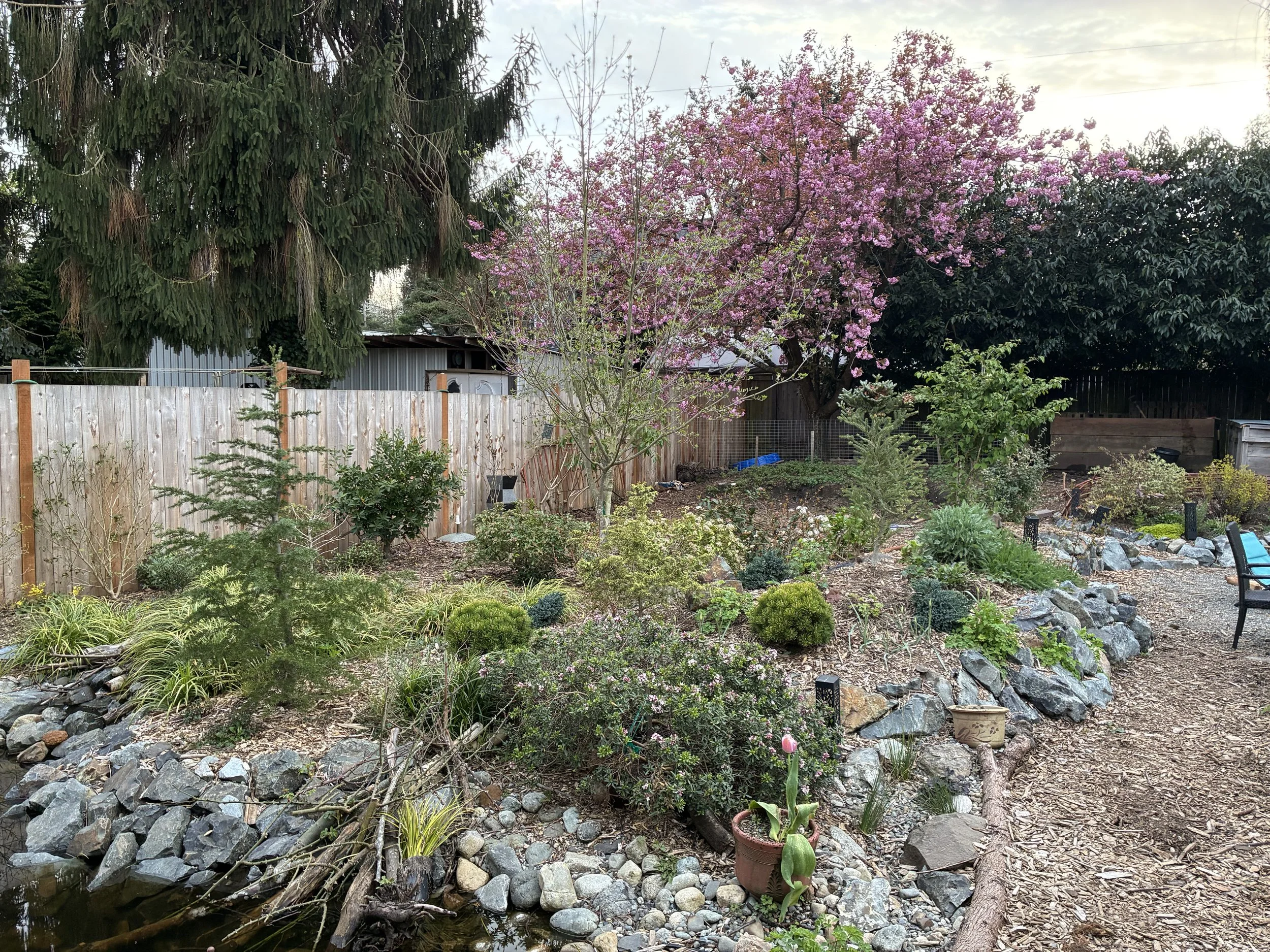
Backyard Berm in April, Waiting
Summer is different. Summer is reactive. Every day seems to bring a new imperative. A patch of weeds that wasn’t there the week before. an hydrangea wilting miserably in the sun, even though you swear you just watered it. An overeager perennial launching a rhizomatous blitzkrieg against neighboring shrubs. Look away too long, and your plants could succumb to weeds, drought, or simply become so unruly that you leave town just to escape the jungle. However, keep on top of things, and you will be rewarded with the most sublime pleasures a garden can offer—vibrant bursts of color, vast drifts of lush foliage, and the best goddam tomato you’ve ever eaten. So, since July 5th, I’ve spent my days watering, weeding, staking, fertilizing, and deadheading. At this point, it’s a kind of pathology.
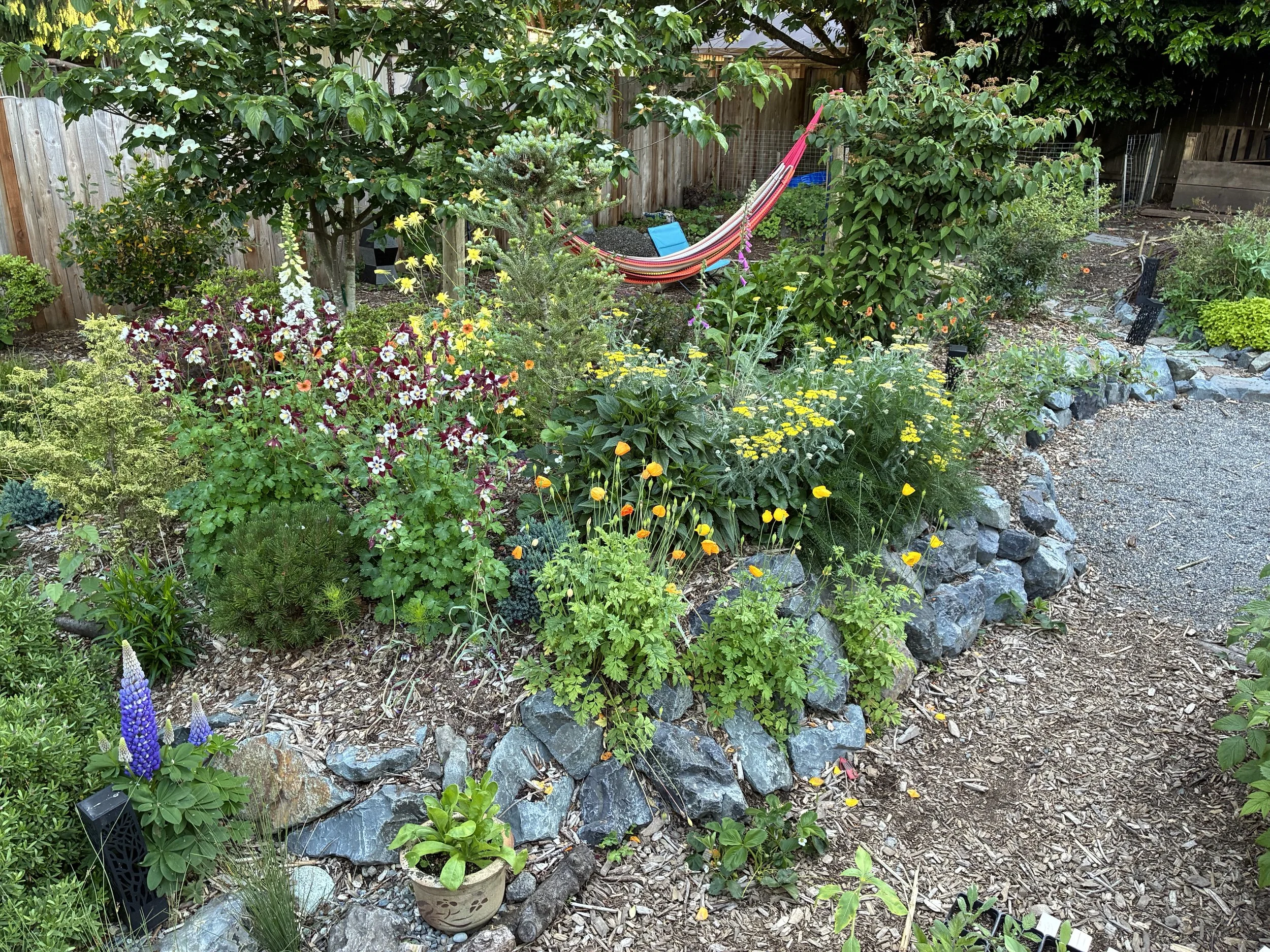
Backyard Berm, End of May
Summer in the backyard brings color to the large berm that runs down the middle of the yard. This garden was borne of convenience—when I dug out my pond, It was easier to pile up the excavated dirt nearby than haul it away somewhere else. So I stacked up a few landscape boulders and called it an “alpine-inspired conifer garden,” which, when viewed alongside the pond, “may give the impression of a mountain lake backed by statuesque evergreens”. Really, it’s a pile of dirt and rocks filled with plants that don’t mind thin, dry soil.
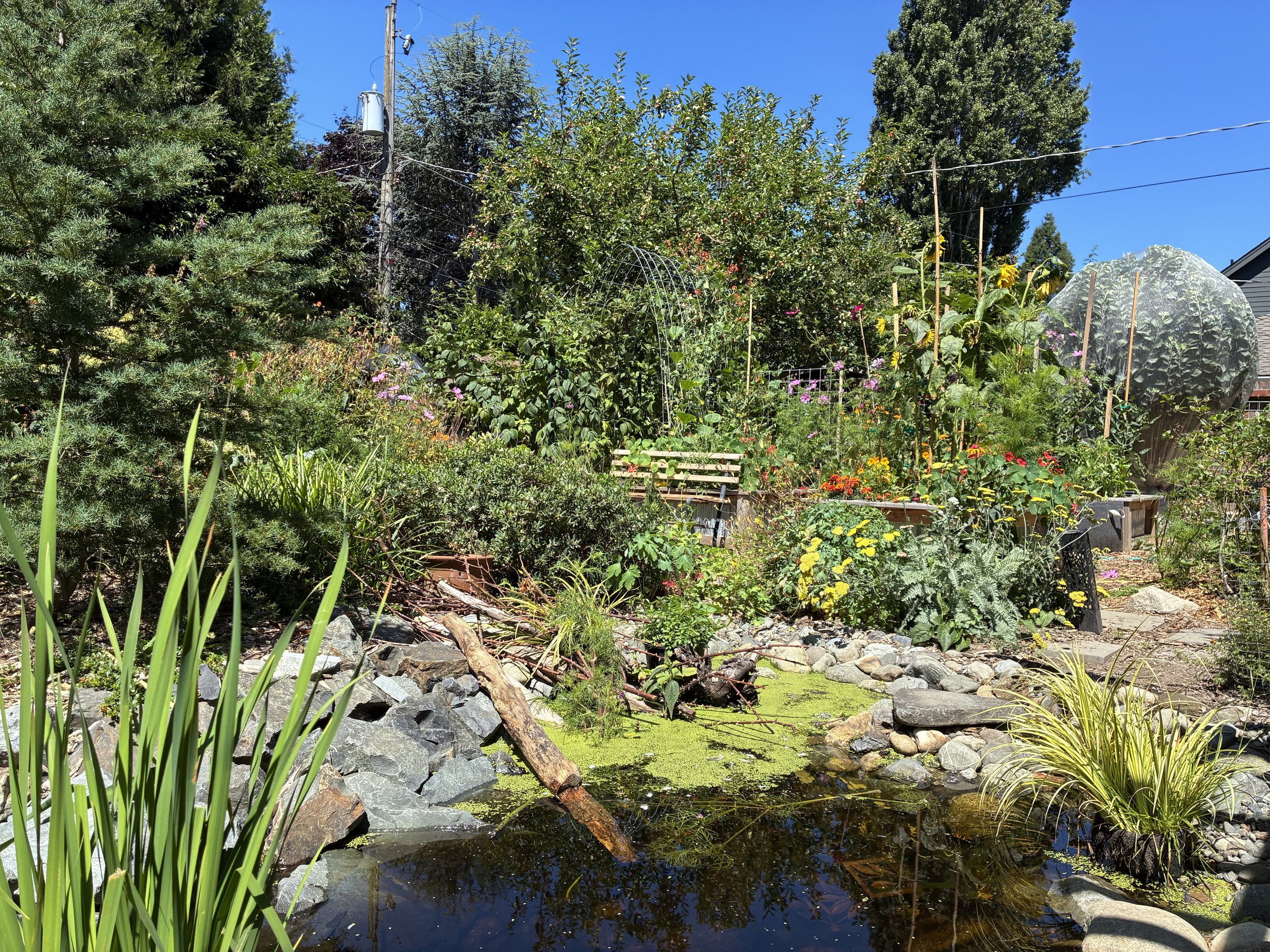
View from the Pond, Late July
The combination of small conifers interplanted with wildflowers works because of its distinct seasonal character. Conifers are at their most striking in winter, especially when rain drips off the sharp foliage and shimmers in the light. By late spring, they almost fade into the background, overwhelmed by bursts of color from Columbine, Lupine, and Foxglove. By the end of July, Black-Eyed Susan is added to the mix, along with the few purple cosmos that the dog hasn’t knocked over yet. The last thing to bloom will be the Aster ‘Wood’s Blue,’ which lasts the entire month of September.
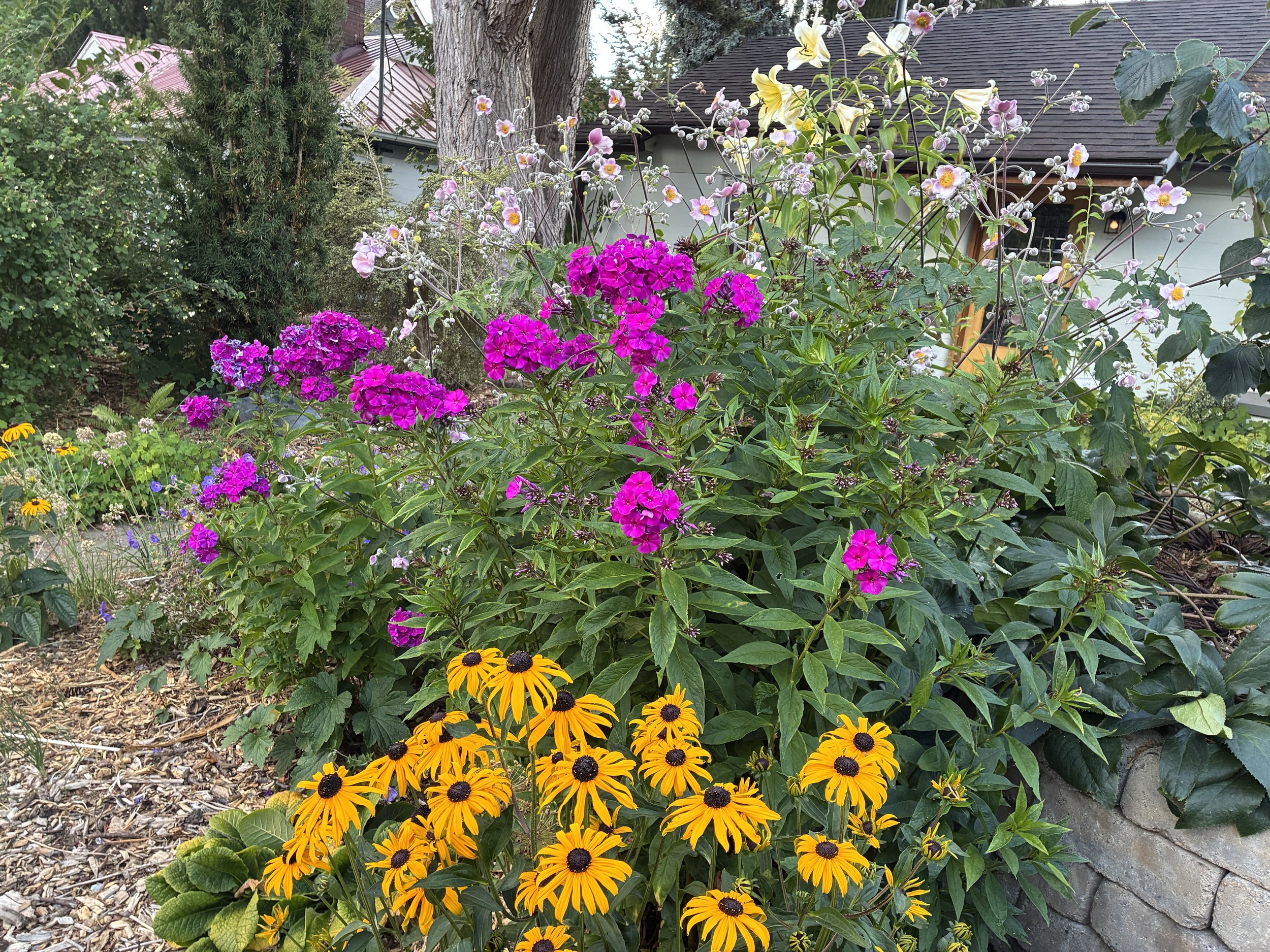
Front Yard Color, Late July
In my front yard, summer means an abundance of blooms. What this garden lacks in structure, it makes up for in whimsy. You’ll find some dozen perennials jousting for sunlight with lances of vivid color until it’s impossible to tell where one ends and the other begins. The result is a of rising tide of flowers, cresting in mid-summer with a combination of Black-Eyed Susan (Rudbeckia), perennial Phlox, Japanese Anemone, and Asiatic Lilies. In its wake, airy clumps of hardy geranium intermingle with Masterwort (Astrantia) and a trio of hot pink shrub roses I wrenched out someone’s yard at the cost of a broken shovel (worth it).
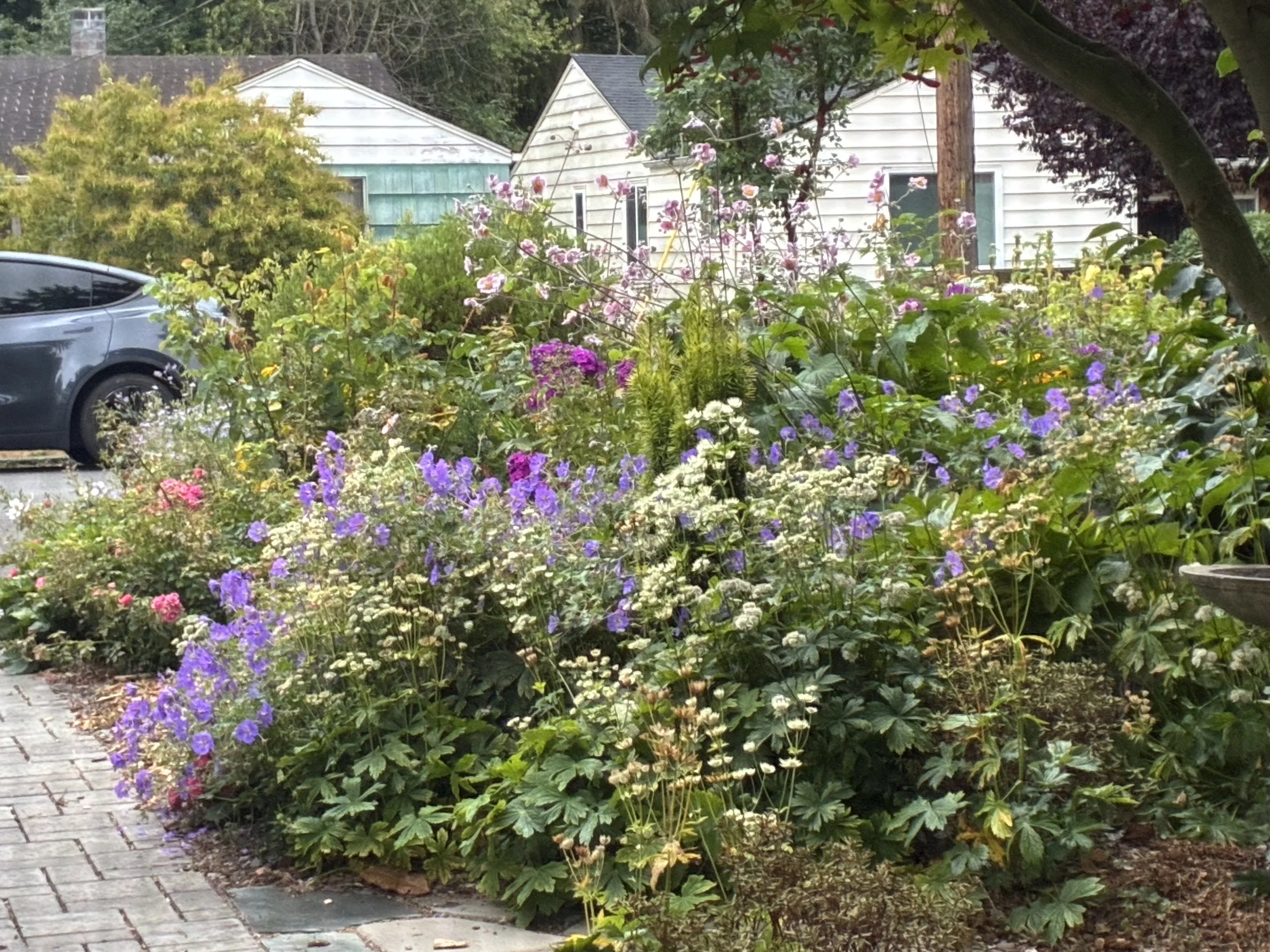
Geranium and Masterwort, Early August
My latest addition to the front yard is a prairie-inspired garden, filled with drought tolerant native perennials that I can forget to water without severe consequences. This combination of Douglas Aster, Yarrow, Fireweed, Goldenrod, and Coneflower is perfect for dry areas in full-part sun. There’s also a border of Autumn Moor Grass (Sesleria Autumnalis), a holdover plant that survived both a long period of neglect by the previous homeowner, and my ruthless culling when I established the bed in its current form. I’m particularly excited for the imminent bloom of my Joe-Pye Weed (Eupatorium). I was wary of planting this perennial—hailed as the “Queen of the Meadow” for it’s towering height and domineering spread—but happened to find a smaller cultivar, ‘Little Joe-Pye,’ which promises a shorter, less imposing habit.
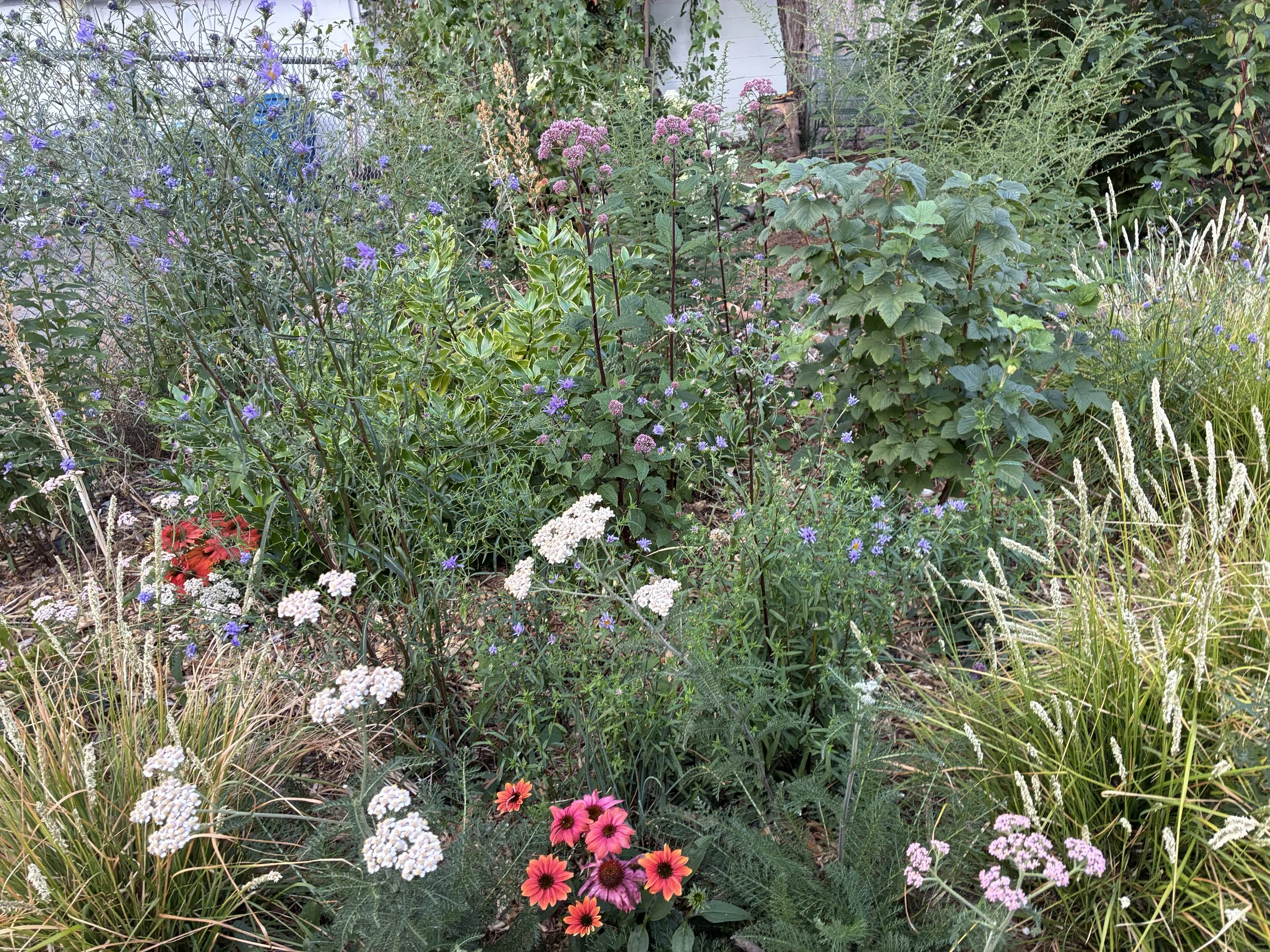
The Native-ish Prairie Garden
A summer perennial garden doesn’t need to be high maintenance. You will get longer bloom periods and more color if you take the time to deadhead, and trim long shoots that shade out smaller perennials, but it’s not really necessary. By August, I find myself turning my attention to the vegetable garden, counting the days until my swollen green tomatoes finally begin to blush. Once again, I am forced to be patient.
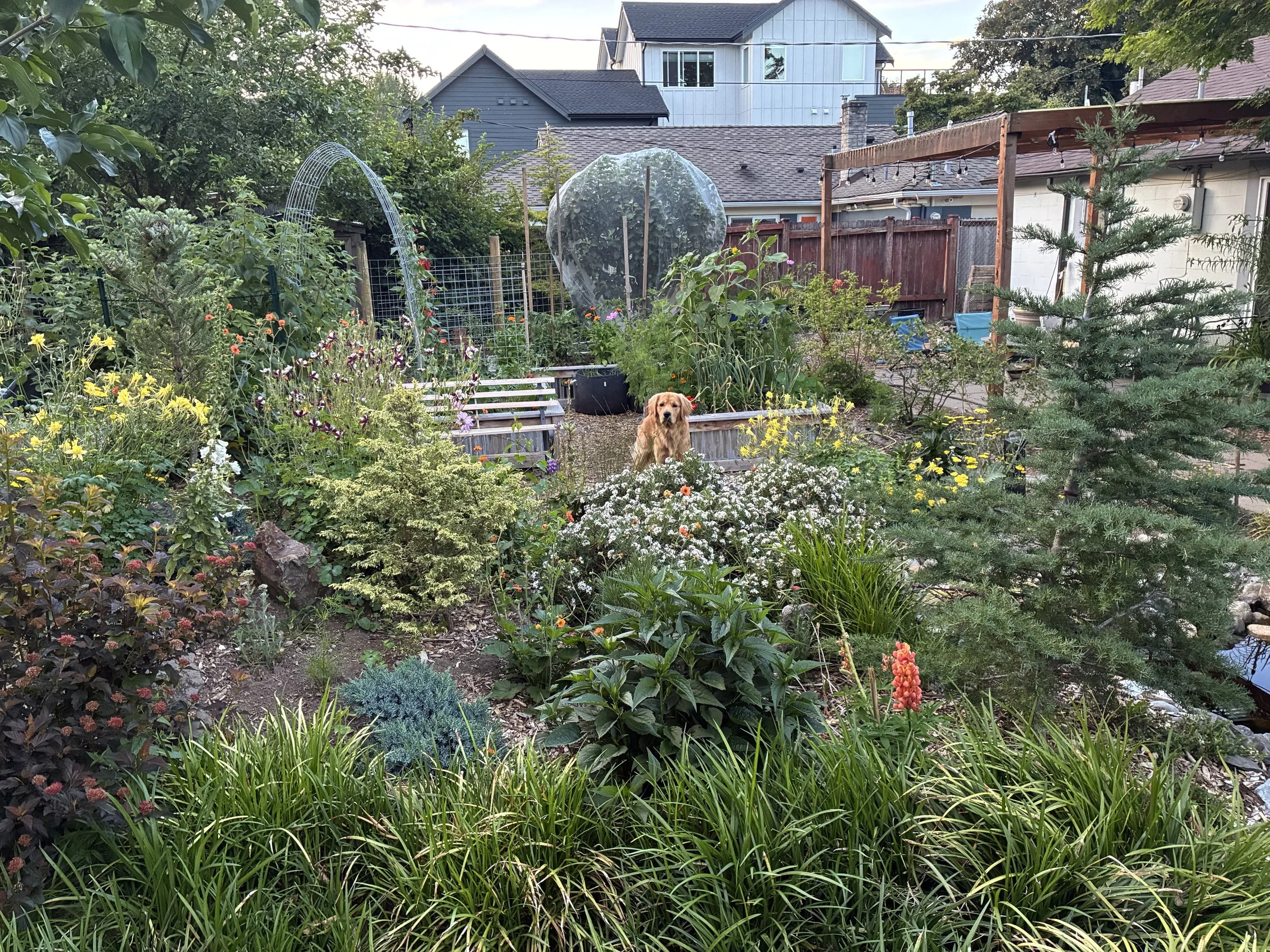
Chester, Waiting Patiently